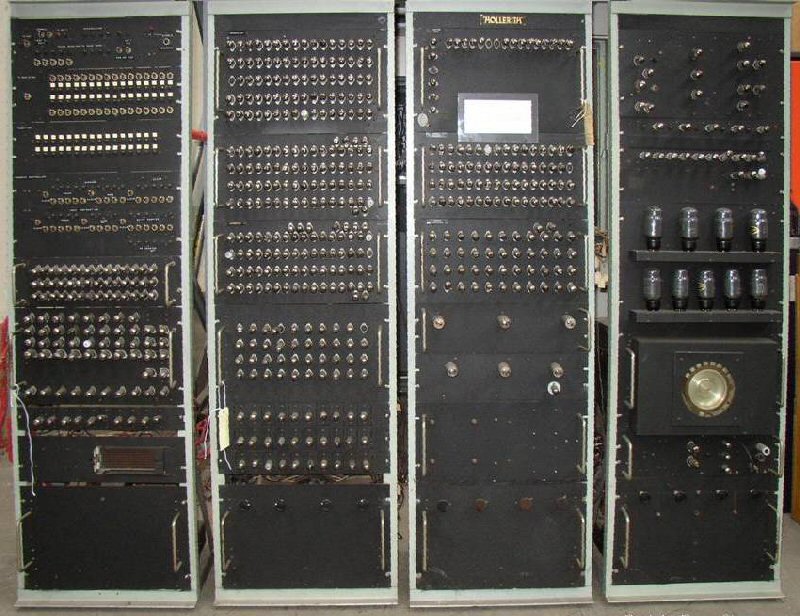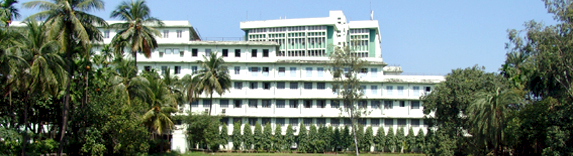
Technically, India's first computer was a small analogue device built in 1953 at Calcutta's Indian Statistical Institute. It was used to solve linear equations. But a year or so later (c.1954–1955), the institute imported a British-built HEC-2M for a princely sum of ₹10 lakh and it is this device which is considered India's first true computer. The computer was a behemoth measuring 10 feet in length, 7 feet in breadth, and 6 feet in height. It had no keyboard, monitor, or even a processor, and was armed with a generous 3KB worth of memory. Input was fed into it using punched cards and output was printed out via an attached printer.
The computer took around 15 minutes to calculate the square root of a 16-digit number. But it was still used (among other things) to solve complex differential equations sent to the institute by Homi J. Bhabha of the Tata Institute of Fundamental Research (TIFR).
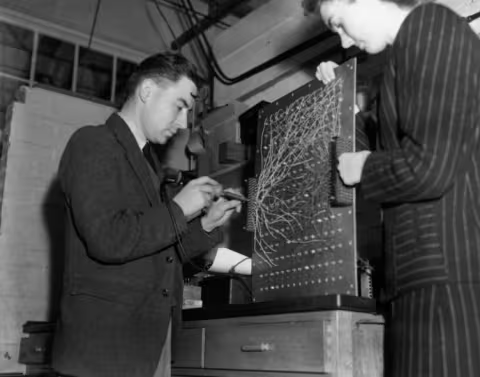
The HEC-2M was part of the APE(X)C, or All Purpose Electronic (X) Computer series designed by Andrew Donald Booth of Birkbeck College in London and manufactured by the British Tabulating Machine Company. The "HEC-2M" stood for Hollerith Electronic Computer (model 2M) with the M denoting that the machine was 'marketable' and suitable for commercial use.
India's first digital computer was unfortunately scrapped in the mid-1970s.