Positive

India's first talkie was Alam Ara (1931) starring Zubeida, who, as the daughter of the Nawab of Sachin, was a princess in real life. The film is now lost.

Dams are sometimes referred to as the temples of modern India. This epithet stems from a speech delivered by Nehru during the opening ceremony of the Bhakra Dam where he said, "This dam has been built with the unrelenting toil of man for the benefit of mankind and therefore is worthy of worship. May you call it a Temple or a Gurdwara or a Mosque, it inspires our admiration and reverence".

The Ganges River Dolphin is essentially blind as its eyes lack lenses. It uses echolocation to locate its prey and uniquely swims sideways.

Some Indian languages have chosen to name the planet Uranus, Prajapati, after the Hindu/Vedic Creator persona. Some prefer the term Harshal, an Indianisation of Herschel. Uranus was discovered by William Herschel in 1781 and named after the Greek god of the sky, father of the Titans, and grandfather of the Greek pantheon.
Some Indian languages have chosen to name the planet Neptune, Varun, after the Hindu/Vedic god of water/rain/ocean. Neptune was discovered in 1846 and named after the Roman god of the sea.

Many Indian languages have chosen to name the "planet" Pluto, Yama, after the Hindu god of death. Pluto was discovered in 1930 and named after the Greek god of the underworld/afterlife.

In Sanskrit, madana tends to mean intoxicating or passionate and is synonymous with the god of love, Kama. Madanankushaha & madanayudham mean penis and vulva respectively.

One of the writers (and sometimes producer) for CSI, Star Trek, Farscape, and other science/sci-fi shows is a certain Naren Shankar.

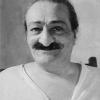
The Baba in The Who's Baba O'Riley comes from Meher Baba, an Indian mystic whose followers included guitarist, Pete Townshend.